Human-First Marketing Is Winning. Here's Why Your AI-Polished Campaigns Are Flopping.
Kwame Sarkodee-Adoo
Editor-in-Chief
Human-First Marketing Is Winning. Here's Why Your AI-Polished Campaigns Are Flopping.
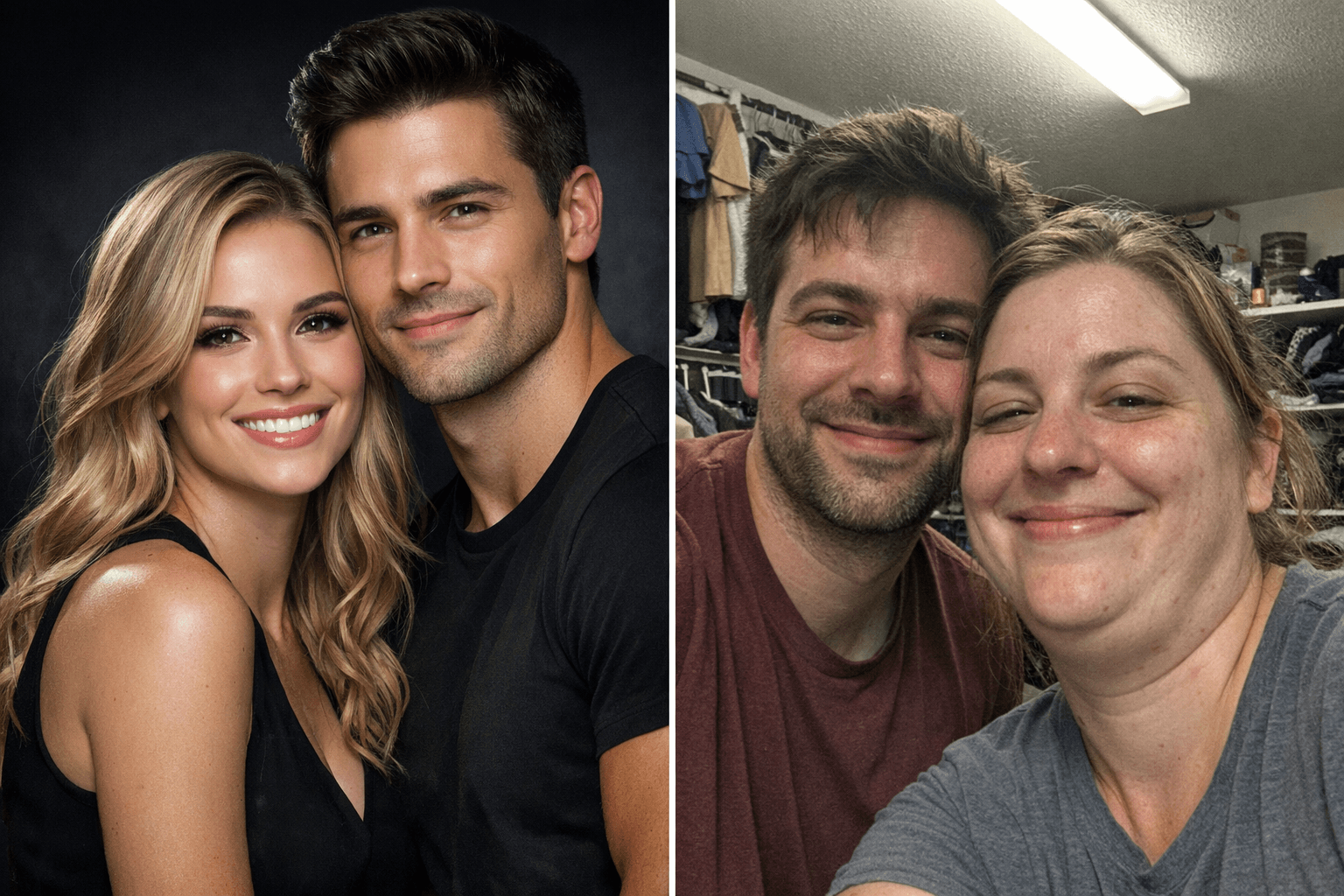
Your AI-generated ad is perfect. It has perfect lighting, perfect skin, perfect composition. It also has the engagement rate of a tax form.
The Plot Twist Nobody Saw Coming
For 18 months, we were told AI would replace creative teams. That algorithms would generate infinite variations of flawless content. That marketers would become prompt engineers, sitting back while machines produced "optimized" ads at industrial scale.
And we listened. Oh, did we listen.
Brands flooded feeds with AI-generated models who had never existed, speaking copy that had never been written by human hands, promoting products in scenarios that had never happened. The content was technically perfect. Emotionally vacant. Engagement cratered.
Then February 2026 happened. And the data started telling a very different story.
The Lo-Fi Rebellion
Lo-fi, candid content is now outperforming high-gloss, AI-polished work by 3x or more.
I am not making this up. Trade data from across the industry shows that authentically imperfect content — the stuff shot on iPhones, lit by window light, featuring actual humans with pores and personalities — is generating significantly more engagement, comments, and shares than campaigns that cost 50x more to produce.
Nike made headlines this month by skipping the Super Bowl entirely. No $7 million ad slot. No celebrity cameos. No AI-generated spectacle. Instead, they redirected that budget toward their role as the NFL's uniform supplier and their 2026 World Cup presence. The result? More cultural relevance than any 30-second spot could buy.
Meanwhile, Svedka debuted the first primarily AI-generated Super Bowl commercial. The backlash was immediate and brutal. Viewers called it "soulless," "uncanny," and — the cardinal sin of advertising — "forgettable." The brand spent millions to be the cautionary tale everyone talked about for 48 hours, then forgot.
The lesson? Perfection is the enemy of connection.
The Psychology Shift: Belonging Over Aspiration
For decades, marketing operated on aspiration. Show the customer who they could become. The thinner body. The bigger house. The more exciting life. Make them want to be somewhere else, someone else, and position your product as the bridge.
That playbook is dying. Not because people stopped wanting better lives, but because the internet broke the illusion.
Social media showed us that the aspirational lifestyles in ads were staged, filtered, and often completely fabricated. The trust is gone. The fantasy feels insulting.
The new winning formula? Belonging over aspiration.
Brands that win in 2026 do not show customers who they could be. They create spaces where customers feel seen as they already are. The question has shifted from "how good does this look?" to "does anyone feel like they're inside this with us?"
Participation density — how many people feel compelled to comment, share, remix, or contribute — is now a better predictor of brand health than raw reach. A post with 10,000 views and 500 engaged commenters is worth more than a post with 1 million views and crickets.
The "Cognitive Dissonance" Strategy
Here is the part that breaks marketing brains: the smartest brands are using AI extensively, but deliberately hiding it.
I call this "cognitive dissonance by design." Use AI backstage for speed, scale, and iteration. Then present the final work as calm, lo-fi, and unmistakably human.
The audience senses competence — the work is too good, too consistent, too responsive to be entirely manual — but they are not bludgeoned by it. There are no glowing AI interfaces in the creative. No "powered by artificial intelligence" badges. No robotic voiceovers explaining how algorithms optimized their emotional response.
The work just... feels cared for.
This is the opposite of what most AI-focused marketers are doing. They are foregrounding the technology, making the AI the story, celebrating the optimization. And audiences are recoiling. Nobody wants to feel like they are being processed by a machine, even if the machine is delivering exactly what they want.
Use AI to be more human. Not to replace humanity.
The Creator Economy Professionalization
While brands were figuring out AI, the creator economy quietly grew up. Three shifts are accelerating:
1. Employee Influencers Are Rising Companies are deploying internal teams — the actual engineers, designers, and customer success reps — as content creators. These people have genuine expertise and authentic stakes in the product's success. Their content converts better than any polished brand campaign because credibility beats production value.
2. Affiliate-Style Performance Payments The era of flat-fee influencer deals is ending. Brands now demand clearer ROI, and creators are accepting performance-based compensation. If the content does not convert, the creator does not get paid. This aligns incentives and forces creators to actually understand their audiences, not just accumulate them.
3. B2B Creator Infrastructure Professional audiences increasingly trust individual voices over brand channels. The "LinkedInfluencer" — the B2B expert who builds a personal brand around genuine expertise — is becoming the most valuable distribution channel for enterprise software, consulting services, and professional development.
The common thread? Authenticity scales better than perfection.
Platform Strategy: Building Owned Spaces
Major brands are making a calculated bet on owned, editorial spaces to hedge against platform volatility.
The problem with building your entire marketing strategy on rented land (Meta, TikTok, X) is that the landlord can change the terms whenever they want. Algorithm shifts can destroy reach overnight. Policy changes can ban entire content categories. And platforms are increasingly compressing meaning into algorithmic sameness — everything starts looking and feeling the same because everything is optimized for the same engagement signals.
The solution? Own your narrative.
Notable brand pivots include:
- Substack newsletters that build direct relationships with audiences
- Reddit-style community forums where customers talk to each other
- Direct mail (yes, physical mail) for high-value customer segments
- Private Discord/Slack communities for true fans
These channels do not have the raw reach of Meta or TikTok. But they have something more valuable: depth of relationship. The customers who opt into owned channels are the ones who buy repeatedly, advocate loudly, and stick around when algorithms change.
The AI Reputation Paradox
Here is a twist nobody predicted: AI is now evaluating brand authenticity for other AI.
AI systems index content across reviews, forums, and social data to assess whether brands actually deliver on their promises. The gap between what a brand says and what it does is increasingly transparent — not just to consumers, but to the algorithms that surface recommendations to those consumers.
If your brand promises "exceptional customer service" but your Trustpilot is a graveyard of one-star complaints, AI-mediated search will surface that disconnect. If you claim sustainability but your supply chain data tells a different story, the algorithms will weigh that evidence.
Brand action and brand promise have to align. Not just because it is ethical, but because AI is now the referee.
What to Do This Week
Enough theory. Here is the practical playbook:
1. Audit Your Content for "AI Slop" Go through your last 20 social posts. Count how many feature:
- Perfect, poreless AI-generated faces
- Lighting that does not exist in nature
- Copy that sounds like it was written by a committee of robots
- Scenarios that clearly never happened
If it is more than half, you have a problem. Replace the next five posts with something shot on a phone, featuring a real human, with natural imperfections intact.
2. Measure Participation Density, Not Just Reach For your next campaign, track:
- Comments per 1,000 impressions
- Shares per 1,000 impressions
- User-generated responses or remixes
- Direct messages or inquiries
Raw reach is a vanity metric. Engagement quality is the health metric.
3. Start One Owned Channel Pick one: newsletter, community forum, or private group. Commit to posting there weekly for three months. Do not promote it aggressively. Let it grow organically. Watch what happens to customer retention and lifetime value for people who join.
4. Find Your Employee Influencers Identify three people inside your company who actually love the product and have natural storytelling ability. Give them a phone, a content brief, and permission to post. Do not script them. Do not polish their work. Just let them talk.
5. Use AI to Speed Up, Not Replace If you are using AI in your workflow (and you should be), use it for:
- First drafts that get human-edited
- Variations and testing
- Research and data analysis
- Personalization at scale
Do not use it for:
- Final creative that customers see without human touch
- Anything claiming to be "authentic" or "genuine"
- Replacing the voice and perspective that makes your brand distinct
The Bottom Line
The AI maximalism of 2024-2025 is correcting. Not because AI is not powerful — it is incredibly powerful — but because humans are still humans, and we have not evolved to prefer machine-generated perfection over authentic connection.
The brands that win in 2026 will be the ones that use AI to be more human, not less. That build belonging instead of aspiration. That value participation over reach. That own their narrative instead of renting audience attention.
Your AI tools are not the problem. Your belief that AI-generated perfection is what customers want is the problem.
They want to feel seen. They want to belong. They want to know there are real humans on the other side of the brand who actually care.
Give them that. Use AI to make it scalable. But never let the machine become the message.
Sources
- The Off Label — Marketing Trends February 2026
- Seafoam Media — February 2026 Marketing News
- eMarketer — 75% of Marketers Say Measurement Is Broken
- Marketing Dive — Marketing Trends Outlook 2026
- AMA Marketing News — 2026 Trends Report
- ALM Corp — Digital Marketing News February 1-10, 2026
- Quad — 27 Marketing Trends and Predictions for 2026
- Precision Strategies — The Five Biggest Digital Marketing Trends in 2026
Sources
This article was based on reporting from The Off Label, Seafoam Media, eMarketer, Marketing Dive. All claims have been independently verified.
About This Article
Research: AI tools monitored news sources; stories selected and verified by editors
Writing: AI-generated draft, extensively edited and enhanced by Kwame Sarkodee-Adoo
Fact-Checking: All claims verified against reputable sources
Published: February 14, 2026
🤖 We believe in transparency. Learn about our editorial process →
Join the Conversation
Stay ahead of the AI curve
Get the latest AI insights delivered straight to your inbox. No spam, just intelligence.