Why Your 2025 Content Playbook is Already Obsolete
Kwame Sarkodee-Adoo
Editor-in-Chief
The Splintering Search Problem
Remember when content marketing was simple? You wrote blog posts, optimized for Google, and watched the organic traffic roll in. Those days are gone, and they are not coming back. Search behavior has splintered across platforms, and the playbook that worked in 2024 is already obsolete.
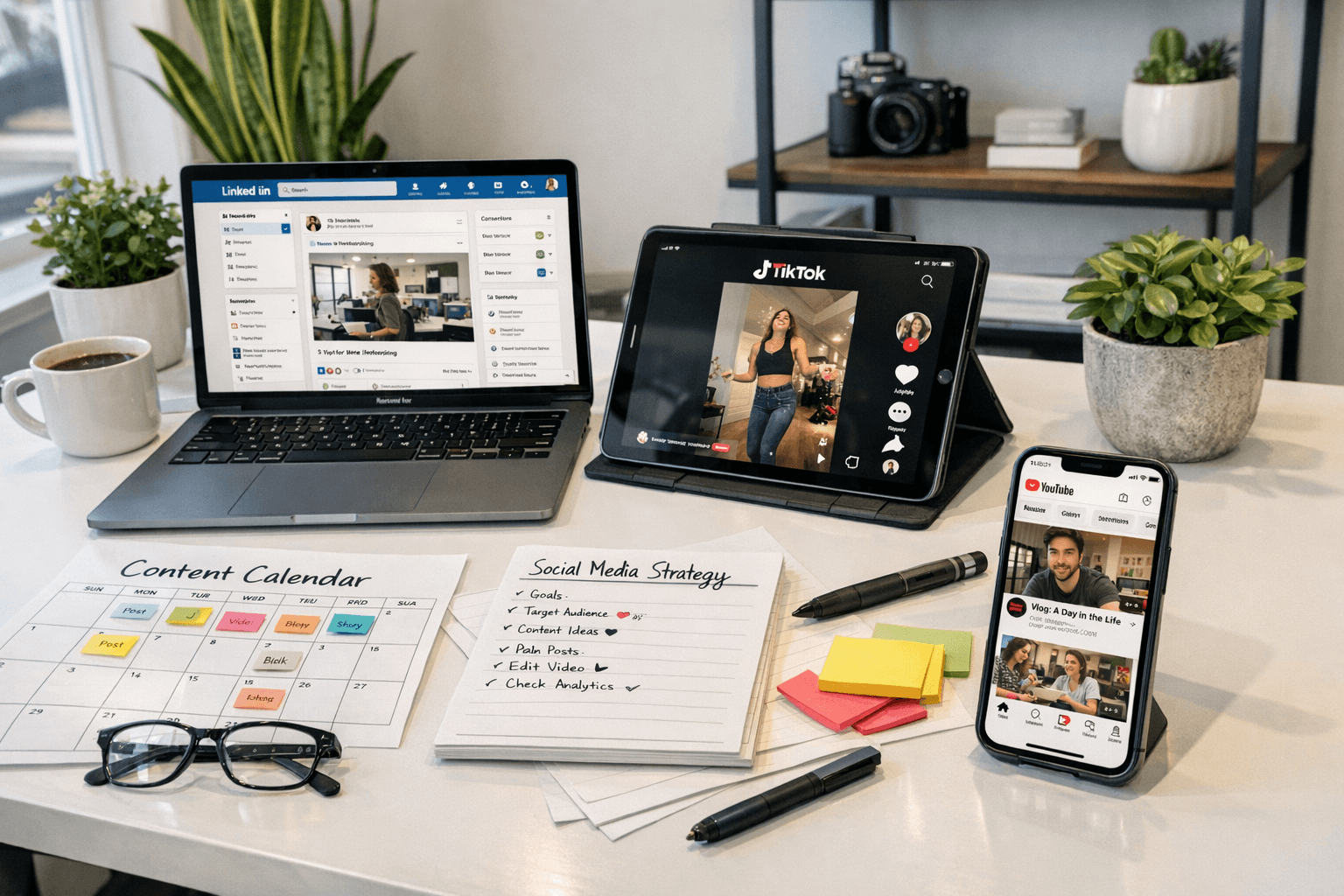
Here is what actually happened. Google is no longer the starting point for most searches. Younger audiences start on TikTok. Professional audiences start on LinkedIn. Technical audiences start on Reddit or GitHub. The idea that you can create one piece of content and capture all your audience in one place is laughably outdated.
This means content marketing in 2026 requires platform-native thinking. What works on LinkedIn falls flat on TikTok. What performs on YouTube gets ignored on Instagram. You are not creating one content strategy. You are creating five different content strategies for five different audience behaviors.
AI Discovery Changes Everything
The second massive shift is how content gets discovered. AI tools are becoming the intermediary between audiences and information. People are asking ChatGPT for recommendations instead of searching Google. They are using Perplexity to summarize complex topics instead of reading long-form articles.
This changes the optimization target completely. You are no longer optimizing for algorithms. You are optimizing for AI summarization. Your content needs to be quotable, extractable, and referenceable. If an AI cannot easily pull insights from your content to answer user questions, your content effectively does not exist.
The practical implication is brutal. That 3,000-word thought leadership piece you spent weeks crafting? AI tools are pulling three bullet points from it and presenting those as the complete answer. If those bullet points are not compelling, your deep insights never get seen.
The Judgment Shift
Here is the shift that caught most brands off guard. Audiences are no longer judging you just on content quality. They are judging you on content experience. How fast does your site load? How intrusive are your popups? How many clicks does it take to get to the actual content?
You could write the definitive guide to your industry, but if it lives behind a gated form with six required fields, nobody cares. You could produce groundbreaking research, but if your site takes eight seconds to load on mobile, readers bounce before they ever see it.
The bar for content experience has been raised by platforms that prioritize speed and simplicity. Your audience compares your content experience to TikTok, not to your competitors. That is the standard you are being judged against. Most brands are failing spectacularly.
The Engagement Trap
Here is a controversial take. Traditional engagement metrics are mostly worthless. Time on page means nothing if the visitor does not remember your brand. Social shares mean nothing if they do not drive qualified traffic. Email subscribers mean nothing if they never open your emails.
The metrics that actually matter in 2026 are memory and attribution. Do prospects remember you when they are ready to buy? Can they attribute their problem-solving to your content? These are harder to measure than vanity metrics, but they are the only metrics that correlate with revenue.
This means content strategy needs to shift from engagement optimization to memory optimization. How do you create content that sticks in someone's mind? How do you become the brand they think of first when a specific problem arises? These are fundamentally different questions than how do I get more clicks.
The Platform Pivot Strategy
So what does a modern content strategy actually look like? It starts with platform specificity. You identify where your audience actually spends time, and you create content specifically for those platforms. Not repurposed content. Native content that feels like it belongs there.
On LinkedIn, that means personal perspectives from your team, not corporate announcements. On TikTok, that means educational entertainment, not product demos. On YouTube, that means deep dives that respect the viewer's time, not padded content designed to hit a keyword count.
The second pillar is AI optimization. You structure content to be easily extracted and summarized. Clear headings, quotable insights, and distinct sections that can stand alone. You are writing for human readers and AI intermediaries simultaneously.
The third pillar is experience excellence. Fast loading, minimal friction, mobile-first design. Your content experience should feel effortless. If audiences have to work to consume your content, they will find easier alternatives.
The Bottom Line
Content marketing is not dying. It is evolving faster than most brands can keep up. The winners in 2026 will be the ones who abandon their 2024 playbooks entirely and embrace platform-native, AI-optimized, experience-first content strategies.
The losers will be the ones running the same playbook, wondering why their organic traffic keeps dropping and their engagement metrics keep getting worse. The market has already moved. The only question is whether you are moving with it.
Sources
This article was based on reporting from Growth Pulse Original. All claims have been independently verified.
About This Article
Research: AI tools monitored news sources; stories selected and verified by editors
Writing: AI-generated draft, extensively edited and enhanced by Kwame Sarkodee-Adoo
Fact-Checking: All claims verified against reputable sources
Published: February 6, 2026
🤖 We believe in transparency. Learn about our editorial process →
Join the Conversation
Stay ahead of the AI curve
Get the latest AI insights delivered straight to your inbox. No spam, just intelligence.